
Infiniti - Game One / Think Quick - Metroplex - Detroit Techno
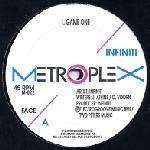 Sample
|
Out of Stock |
Track ListingA Game OneB1 Think Quick B2 Think Quick (Remodeled by Moritz von Oswald) Media Condition » Mint (M) Sleeve Condition » Mint (M) |
|
| Artist | Infiniti | ||
| Title | Game One / Think Quick | ||
| Label | Metroplex | ||
| Catalogue | M-022 | ||
| Format | Vinyl 12 Inch | ||
| Released | 1994 | ||
| Genre | Detroit Techno |
 Listen
Other Titles by Infiniti
• Game One / Think Quick • Higher •
Some Other Artists in the Detroit Techno Genre• Underground Resistance • Theo Parrish • Bottom Feeders, The • Inner City • Fascinating Rhythm • Random Noise Generation • Suburban Knight • Flexitone • Omar-S • Tres Demented • Paris • EMB • Kreem • X 103 • 2 The Hard Way • 69 • Klout • Aux 88 • Bileebob • Nomadico • Open House & Placid Angles • Diva • Bango • Bridgett Grace • Circuit Breaker • Calloway • Chaos • Conmen • Jeff Mills • Dean & Deluca • Rhythim Is Rhythim & Derrick May & Mayday • Kenny Larkin • Innerzone Orchestra • Fade To Black • Rhythim Is Rhythim • H & M • Global Electronic Network • Geology • Astro-Physics • Eddie/Santiago/Art Forest • |
Some Other Artists on the Metroplex Label• Model 500 & 3MB • Model 500 • X-Ray • Vision, The • DJ Bone • Other Side Of Space, The • M5 • Model 600 • Plural (3) • |
Information on the Detroit Techno Genre
Detroit techno is an early style of electronic music beginning in 1980s. Detroit has been cited as the birthplace of techno music. Prominent Detroit Techno artists include Juan Atkins, Derrick May, and Kevin Saunderson. A distinguishing trait of Detroit techno is the use of analog synthesizers and early drum machines, particularly the Roland TR-909, or, in later releases, the use of digital emulation to create the characteristic sounds of those machines.Detroit techno music was originally thought of as a subset to Chicago's early style of house. However, some critics believe that the Detroit techno movement was an adjunct to house music, named for the new style of music played at a Chicago nightclub called "The Warehouse". Although producers in both cities used the same hardware and even collaborated on projects and remixes together, Detroiters traded the choir-friendly vocals of House with metallic clicks, robotic voices and repetitive hooks reminiscent of an automotive assembly line. Many of the early techno tracks had futuristic or robotic themes, although a notable exception to this trend was a single by Derrick May under his pseudonym Rhythim Is Rhythim, called Strings of Life. This vibrant dancefloor anthem was filled with rich synthetic string arrangements and took the underground music scene by storm in May 1987. With subtle differences between the genres, clubs in both cities included Detroit techno and Chicago house tracks in their playlists without objection from patrons (or much notice by non-audiophiles).
The three individuals most closely associated with the birth of Detroit techno as a genre are Juan Atkins, Kevin Saunderson and Derrick May, also known as the "Belleville Three". These three high school friends from the Detroit suburb would soon find their basement tracks in dancefloor demand, thanks in part to seminal Detroit radio personality The Electrifying Mojo. Ironically, Derrick May once described Detroit techno music as being a "complete mistake...like George Clinton and Kraftwerk caught in an elevator, with only a sequencer to keep them company.
Data from the Discogs music database. Submit a Release.
