Format:
Genre:
Year:
Stock Level:
Keywords:
[ reset ]

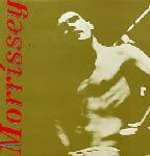
Morrissey - Suedehead - His Master's Voice - Indie

Morrissey - Suedehead - His Master's Voice - Indie
Out of Stock

Track Listing

A Suedehead (3:53)
B1 I Know Very Well How I Got My Name (2:01)
B2 Hairdresser On Fire (3:49)


Media Condition » Very Good Plus (VG+)
Sleeve Condition » Very Good Plus (VG+)
Artist Morrissey
Title Suedehead
Label His Master's Voice
Catalogue 12POP 1618
Format Vinyl 12 Inch
Released 1988
Genre Indie

<< Back

Other Titles by Morrissey

Greatest HitsRingleader Of The TormentorsYou Are The QuarryBeethoven Was DeafBona DragBona DragBoxersHold On To Your FriendsInteresting DrugPosing In ParisSuedeheadThe Boy RacerThe Last Of The Famous International PlayboysThe Parlophone Singles '88-'95Vauxhall And I


Some Other Artists in the Indie Genre

The FarmBedazzledTouch Of EvilThousand Yard StareThe Soup DragonsJesus JonesWonder Stuff, TheFive ThirtyHis Latest FlameAn Emotional FishCUDCarter The Unstoppable Sex MachineThat Petrol EmotionSenseless ThingsThe Darling BudsThe PopinjaysLivingstoneThe MissionThe Wonder StuffOasisSoup Dragons, TheBlurEverything But The GirlNatural LifeInspiral CarpetsIan BrownFaith BrothersNed's Atomic DustbinBirdlandThe HousemartinsThe Wedding PresentMy Jealous GodDaytona Happy MondaysSensitize Magic Numbers, ThePushermanGay DadViolets, TheTest Icicles

More from Indie >>

Some Other Artists on the His Master's Voice Label

Andrew Lloyd WebberOrchestra Of The Royal Opera House, Covent Garden & John LanchberyJean Sibelius, Sir John Barbirolli & Hallé OrchestraPyotr Ilyich Tchaikovsky, Guido Cantelli & Orchestra Del Teatro Alla ScalaFats Waller & His RhythmEydie GorméPyotr Ilyich Tchaikovsky, Guido Cantelli & Philharmonia OrchestraJoe Loss & His OrchestraGyorgy CziffraVera Gray & Desmond BriscoeMel Tormé & Marty Paich OrchestraPaul RobesonGlenn Miller And His OrchestraSir Simon Rattle & London SinfoniettaNikolai Rimsky-Korsakov, Paul Kletzki & Philharmonia OrchestraIvor NovelloSir Edward Elgar, Margaret Marshall, Helen Watts, Robin Leggate, John Shirley-Quirk & Royal Liverpool Philharmonic Choir Camille Saint-Saëns, Michel Béroff, Jean-Philippe Collard & Maurice AndréMelina Mercouri & Don Costa OrchestraThe Early Music Consort Of London & David MunrowJohnny Kidd & The PiratesGeorg Friedrich Händel, Sir Charles Mackerras, English Chamber Orchestra & The Ambrosian SingersSauter-Finegan OrchestraSergei Prokofiev, Enrique Batiz & London Philharmonic OrchestraRay Charles And His OrchestraOrchestra Of Royal Opera Hse, Covent Garden & John LanchberyMily Balakirev, Anatoly Liadov, Neeme Järvi & City Of Birmingham Symphony OrchestraJoseph Haydn, Sir Thomas Beecham & The Royal Philharmonic OrchestraManfred MannMeade Lux LewisPyotr Ilyich Tchaikovsky, Riccardo Muti & Philadelphia Orchestra John Ogdon & Philharmonia OrchestraOrchestra Of The Royal Opera House & John LanchberyLouis Frémaux & City Of Birmingham Symphony OrchestraAntonín Dvorák, Riccardo Muti & New Philharmonia Orchestra Georges Bizet & Risë Stevens & Jan Peerce & Licia Albanese & Robert Merrill & Fritz ReinerSir William Walton & André PrevinEartha KittSarah Brightman, Paul Miles-Kingston & Placido DomingoRay Charles

More from His Master's Voice >>

Information on the Indie Genre

Indie pop is a genre of alternative rock music that originated in the United Kingdom in the mid 1980s, with its roots in the Scottish post-punk bands on the Postcard Records label in the early '80s such as Orange Juice and Josef K and the dominant UK independent band of the mid eighties, The Smiths. While the term 'indie' had been used for some time to describe artists on independent labels (and the labels themselves), the key moment in the naming of the genre was the release of NME's C86 tape in 1986. Although featuring a wide range of bands including Primal Scream, Bogshed, Half Man Half Biscuit, and The Wedding Present, it over time became shorthand for a genre known by a variety of terms. Initially it was dubbed 'C86' (after the tape itself), the more ambiguous indie pop, Cutie or a term coined by John Peel: shambling bands. Retrospectively, especially in the United States, the terms twee and twee pop were used, initially ironically, due to what commentators called the "revolt into childhood" of its followers. Musically its key characteristics were jangling guitars, a love of sixties pop and often fey, innocent lyrics. The UK label Sarah Records and its most popular band The Field Mice, although more diverse than the label indicates, were probably its most typical proponents. It was also inspired by the DIY scene of punk and there was a thriving fanzine, label and club and gig circuit. Scenes later developed in the United States particularly around labels such as K Records. Genres such as Riot Grrrl and bands as diverse as Nirvana, Manic Street Preachers, and Belle and Sebastian have all acknowledged its influence.

Data from the Discogs music database. Submit a Release.